
Looking around in Norway, you will have to look hard to find other historical monuments than nature itself. What has been created by man in the past, seldom survives the generations. It is a challenge in this country that connection to and knowledge about our local past is weak. The future of one of Norway’s most beautiful park is a sad example. It is about to turn into football fields for a local club.
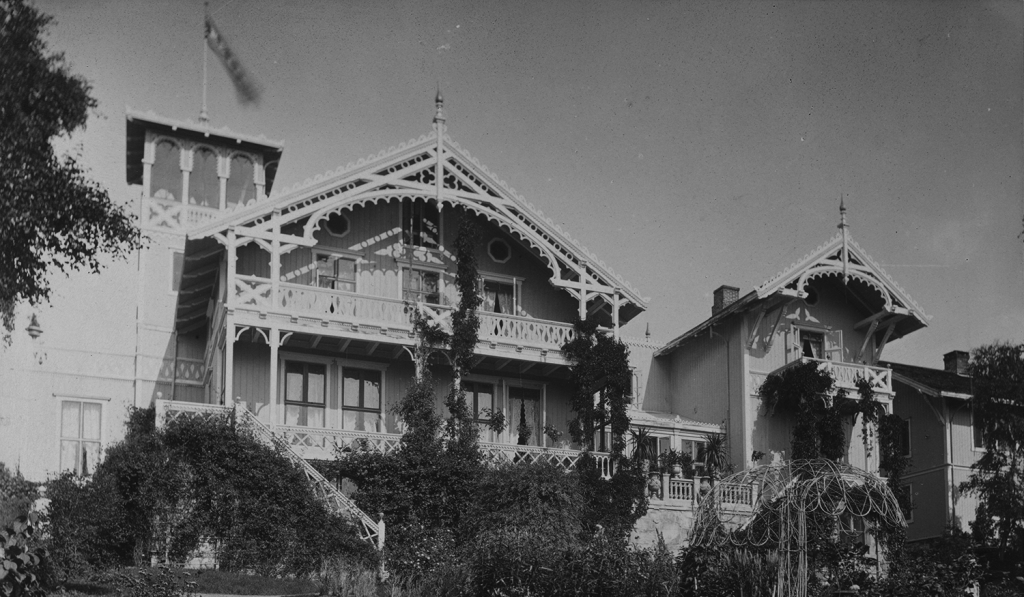
In an op-ed published in the local newspaper Romsdals Budstikke on May 7th, a citizen from the city of Molde on the northwest coast of Norway, Leif Sverre Hoel, argues that Molde Municipality should accept the offer from Molde Football Club to develop the central park in the city, Villa Retiro, into a football facility. He argues that at the very least the money will give an opportunity to restore the residence of one of Norway’s most wealthy merchants Christian Johnsen (1828 – 1893) to its original state. The deal is to let go of a 100 acres of land, including an old forest, with the purpose of constructing four huge football fields, in exchange for restoring the house in which the merchant lived during summer. The football club’s offer is to demolish the park, which is currently open to the public, situated in the middle of the city centre, and will give back a restored house that will be open to those who can pay.
Yesterdays history shapes today’s identity
The natural area is not being valued in light of Molde Football Club’s needs. Still, it is commendable that the aesthetic value of the residence is finally being acknowledged—though unfortunate that it took a connection to football to make that happen. But perhaps that’s not so surprising. From the perspective of Sunnmøre, south in the county, football is becoming the last remaining element through which Molde can constitute a sense of place. The cultural city of Molde, the city of roses and jazz, known for aesthetics, music, and cultural life, has relinquished a cultural heritage that could have generated even more added value for the wallets of the very rich businessmen, Røkke and Gjelsten—and perhaps also helped strengthen a struggling municipal economy. But this is a well-known historical phenomenon: when the coffers are empty, irreplaceable values are put up for sale. Nature users in Molde likely have a weak case.
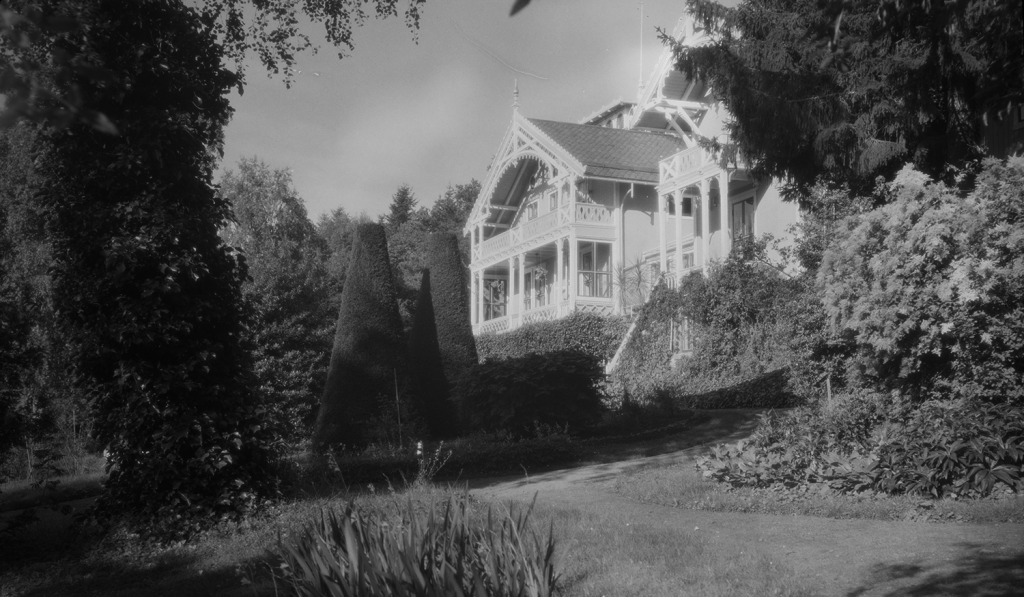
At the very least, it is worth remembering that the forest is more than just “trees and birds with bigger problems,” to quote Hoel.
A unique piece of Norwegian fairytale land
Retiro Park was once a truly unique piece of fairytale land in Norway and played a significant role in shaping Molde into the city it became—a cultural city. The park was initiated in 1872 and was likely the most magnificent example of Victorian garden design in the country. It featured meadows, coniferous and deciduous trees, both planted and native. In the heart of Molde lies a truly distinctive forest over 150 years old, with all its associated life.
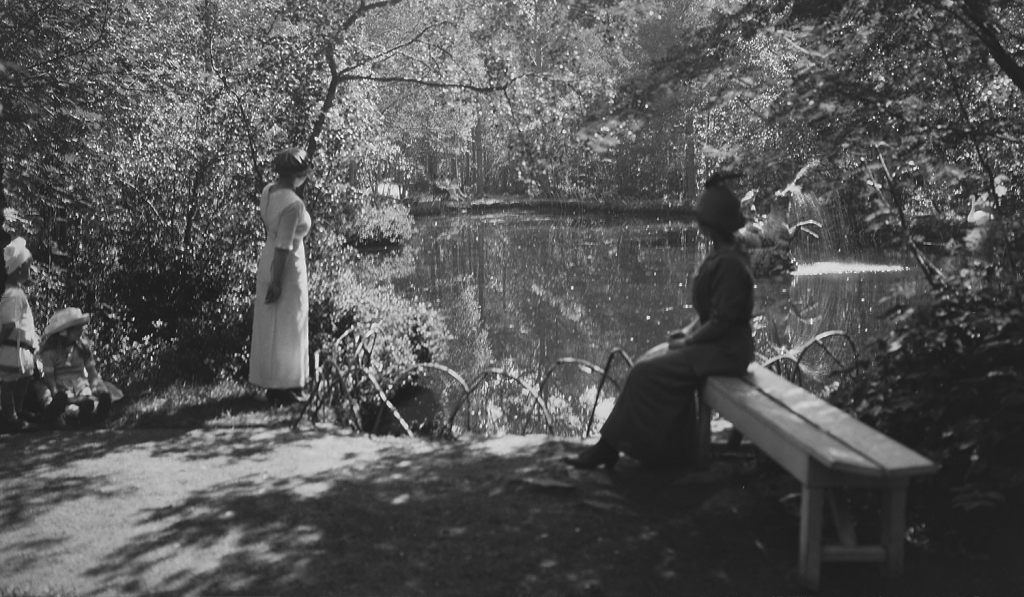
The grounds also included ponds and small lakes nestled between hills and natural elevations, connected by paths that linked the various functional areas. In the northeastern part of the park, there were apple, pear, plum, and cherry trees, as well as vegetable and berry gardens. The greenhouse even housed grapes and figs. In other words, Retiro Park had fertile soil that nourished a rich diversity of plant life. This soil did not appear on its own—it was largely ballast soil, which the owner, clipfish exporter Christian Johnsen, used to cultivate what was originally a rocky and barren plot. The area was initially marshy and infertile, so extensive drainage, ditching, and stonework were carried out. It was costly—but beautiful. Here, the cultural elite gathered—national and international figures, politicians, and societal actors—and the grounds thus became a venue for networking in aesthetic surroundings. That has never gone out of fashion—and the park still holds the potential to become such a place again. That is likely why, for some, the building is more important than the forest itself. But without the forest and the surrounding vegetation, the building is torn from its historical context.
How does collective aesthetics evolve?
Johnsen opened the park to the public, giving all the city’s residents access to its beauty—and to aesthetic education. To what extent did the park influence general cultural development in Molde? How do aesthetic spaces shape the collective sense of “we”? If the municipality and its financial backers had joined forces to preserve both the buildings and the park, it would today stand as a unique historical memory of a cultural context in which the capitalist was able to share and include—by equipping people for the life ahead of them, whether they had money or not. Johnsen created the park as a place of rest, knowing that aesthetics and gentle surroundings were valuable to the human spirit—and this was part of the European project of education and civilization at the time. Sadly, that too has not gone out of fashion.
Now the site is to be turned into a training ground for new investments in a different temporal context. Football is undoubtedly a form of rest for many of us—but certainly not for all. Human nature has not changed significantly since Johnsen’s time—the need for rest, for retiro, is just as great today as it was then, and the healing power of nature is indisputable. Molde Municipality has long neglected its responsibility for the grounds—in favour of developing a magnificent urban forest unlike any other in Norway. Now that politicians are waking up, they may not see the value this forest could hold for future generations—both as a marker of identity for a local community and a region, and for the individual’s need for recreation. Football and industry are more modern and relevant identity markers in this country—but with far shorter lifespans. Nature works deeply and enduringly. I believe future historians will struggle to understand the reasoning if the forest is sacrificed for football fields. The actors involved are taking on a great responsibility—one that will be scrutinized in the future.
Be unique, but not at the expense of what is already unique
The football club of Molde (MFK) has many devoted supporters in the county, myself included—and we wish the club success and greatness long into the future. But perhaps it will taste even sweeter if it does not come at the expense of an exceptional natural and cultural environment of local, regional, and national value—right in the heart of the city. There will be no opportunity for a rematch here. Just don’t join the typical Norwegian approach to historical herritage. That weakens your collective identity and identity matters.
Top photo: National Library – Axel Lindahl